
Personnages de South Park : un guide pratique pour de meilleures notes de référence
Créez des notes de référence utiles pour les personnages de South Park grâce à 12 profils illustrés, des descriptions précises de tenues et une méthode pour planifier des figures de cartoon originales.
Nouveautés sur cette page
- — Article publié.

An effective reference note tells you what must stay recognizable and what can change. South Park characters are a good place to practice because their identities depend on a few prominent features: Kenny's hood, Kyle's earflaps, Stan's cap, and Cartman's wider body. The designs are simple, but vague descriptions still lead to confusion. For a character described in your own words, try South Park Character Creator.
Using images from the South Park Public Library, this guide shows how to turn a portrait into a short, useful visual specification. The observations are based on the pictured artwork.
Begin with identity anchors
An identity anchor is a feature you can use to recognize a figure after the pose, crop, or background changes. Record three at most in your first note. If everything is marked essential, you have not decided what carries the design. Start with the silhouette, then the largest colors, then a distinctive accessory.
Eric Cartman
For Cartman, the broad body, red jacket, and turquoise cap with yellow trim form a useful first note. Yellow mittens reinforce the palette. “Boy in a red coat” is too broad because Clyde also wears red; body width and headwear resolve that ambiguity immediately.
Kyle Broflovski

Kyle's reference can begin with a green earflap hat and orange coat. The hat's squared top and side flaps deserve explicit mention because they define the head outline. The small coat pockets come later: they add accuracy, but they are less useful than the major shapes for initial identification.
Stan Marsh

Stan has a rounded blue cap with a red band and pom-pom, above a brown jacket. His red gloves repeat the accent color. A note that distinguishes a rounded knit cap from Kyle's boxier earflap hat is more precise than one that merely lists blue and green.
Kenny McCormick
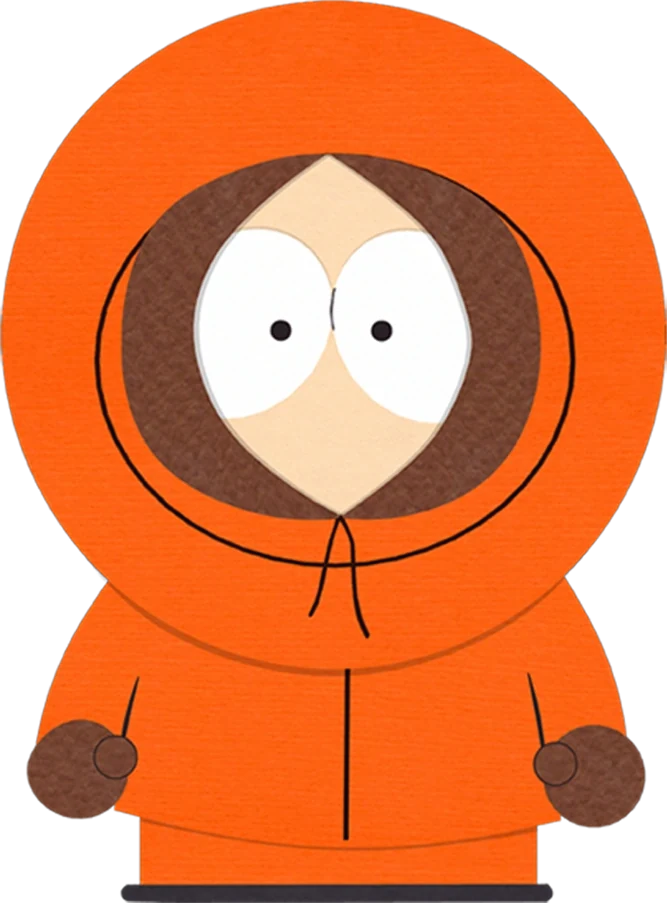
Kenny's orange hood surrounds a small visible face, with a dark interior border and drawstrings below. Keep the distinction between the hood and an ordinary hat. It affects how much of the face is exposed and explains why the head outline carries so much of the portrait's identity.
Separate the head from the clothing
Wendy Testaburger

Wendy's pink beret and long dark hair can be recorded separately from her purple jacket. That separation is useful if you are comparing crops. A headshot may preserve the beret while hiding the lower hair length, so the image can remain identifiable but become less complete as a costume reference.
Bebe Stevens
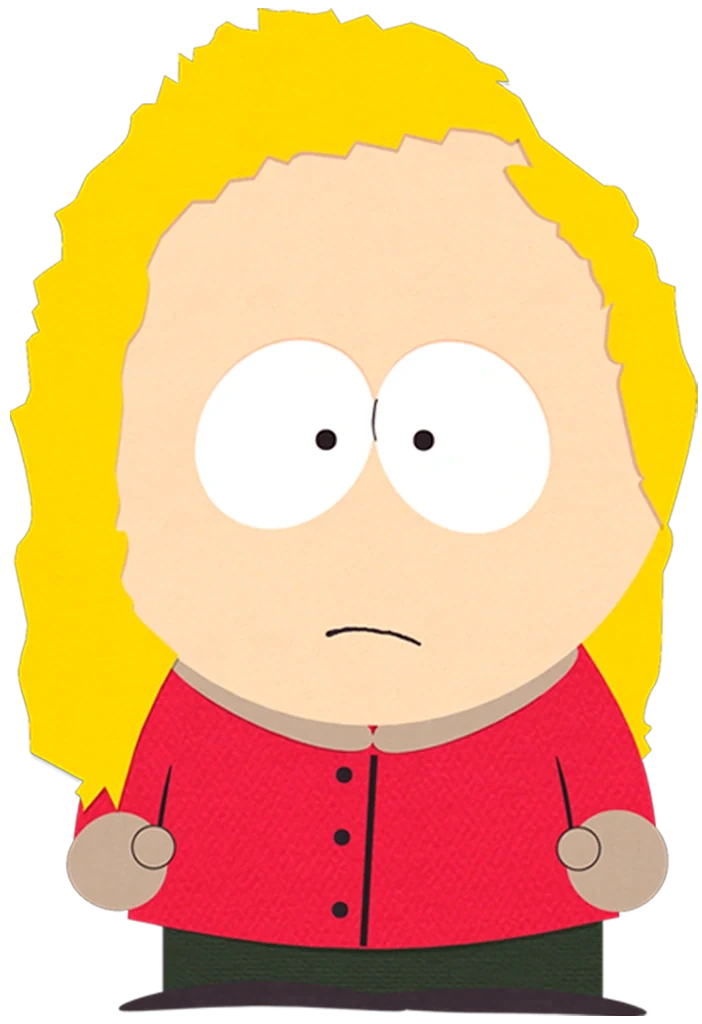
Bebe's blond hair is a large shape around the head and shoulders, with a red top beneath it. Name the hair's volume, not just its color. Otherwise, a note could wrongly suggest that her outline resembles Butters or Tweek simply because all three have blond hair.
Butters Stotch

Butters wears a turquoise shirt below a small pointed blond tuft. The relatively bare head outline is an important contrast with the four central boys' hats. A concise reference note can capture that distinction without making unsupported claims about the expression or the story behind this neutral pose.
Tweek Tweak

Tweek has a more scattered hair contour, with several blond spikes extending outward. His olive shirt's front closure is uneven. These visible differences are better reference information than a broad instruction such as “make him nervous,” which leaves the physical design open to many incompatible interpretations.
Include features outside the face
Craig Tucker

Craig's blue jacket and blue earflap cap form a connected color scheme, interrupted by a yellow pom-pom. A careful note distinguishes him from Kyle by palette and hat shape. Earflaps alone are insufficient; several characters share individual elements, so identity depends on their combination.
Clyde Donovan

Clyde's red jacket has blue trim and gloves, and his brown hair is uncovered. That gives you a useful contrast with Cartman. Record the absence of a hat only when it matters to the pictured outfit; do not turn one reference into a claim about every possible appearance.
Jimmy Valmer

Jimmy's crutches are visible alongside his yellow top and brown hair. They influence the pose and the space around the figure. Include the full arrangement in a reference note, while still identifying Jimmy as a person rather than describing only the supports or isolating them from his body.
Timmy Burch
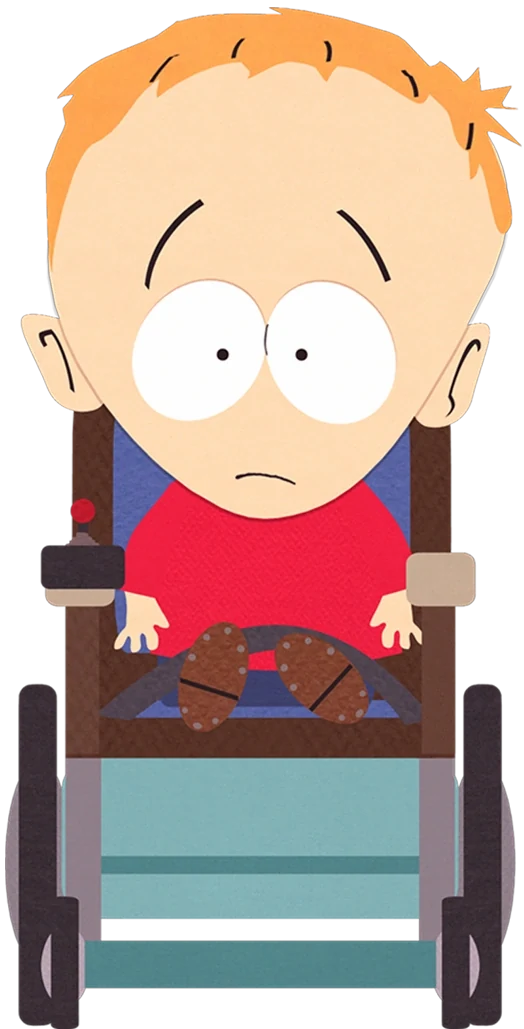
Timmy's wheelchair, red shirt, orange hair, and seated proportions all appear in this portrait. A specification for a full-body image should preserve their relationship. A face-only crop cannot supply the same information, even if the name and hairstyle are enough to identify who is pictured.
Move from a reference to a new character
A South Park character creator brief benefits from the same discipline, but an original character needs its own identity anchors. Choose an occupation or interest, a garment with a clear shape, and a small palette. Those decisions provide a starting point without combining existing characters into a confusing imitation.
For instance, consider an original student who collects weather data: a dark blue raincoat, short auburn hair, and a small yellow notebook. The notebook explains an activity; the coat sets the main color; the hairstyle defines the upper contour. Write those as separate requirements before asking for a pose or background.
When working with a South Park character maker, review a first image against the note. If the notebook has become a stack of books, correct that detail. If the coat's shape changed, revise the garment description. Adjust the brief based on the visible discrepancy instead of replacing every sentence at once. You can begin a visual brief on the homepage and find other reference discussions in the blog. Choose the few visual details your reference notes need to preserve when you try South Park Character Creator.
A reference note you can reuse
A compact reference record can contain four lines: name, head shape, outfit, and context. For Craig, those lines might identify the character, describe the blue earflap hat with yellow pom-pom, record the blue coat, and label the picture as a front-facing character portrait. That note remains useful even when the image is temporarily unavailable.
Keep observations separate from requests. “Blue coat” records what the reference shows; “move the figure beside a bicycle” asks for a new scene. Mixing the two can make a later revision confusing, because it becomes unclear whether a bicycle was part of the original reference or an added idea. For an original character, use the same separation. Record the fixed design once, then write each proposed variation beneath it. You can then compare a new image with a stable note without rewriting the person's identity every time you change the setting.
Label episode-specific references

The South Park World of Warcraft search phrase points toward Make Love, Not Warcraft. In the episode, a powerful player repeatedly kills the boys' game characters, and Cartman organizes an effort to build their strength and defeat him. That story context belongs in an episode reference note.
The computer-lab image shows altered appearances alongside familiar clothing. Kyle still wears green headwear, Kenny keeps the orange hood, and Stan has his blue-and-red cap. Cartman appears in the red jacket without the usual hat. A note should record those actual details rather than copy the standard portrait's description onto this frame.
Une fiche de référence pratique pour un créateur South Park peut distinguer trois choses : le personnage, la tenue visible et le contexte de l'image. Les portraits de Cartman South Park et cette image d'épisode partagent une identité, mais leurs notes de costume ne sont pas identiques. Pour développer un personnage décrit dans vos propres mots, essayez South Park Character Creator.